

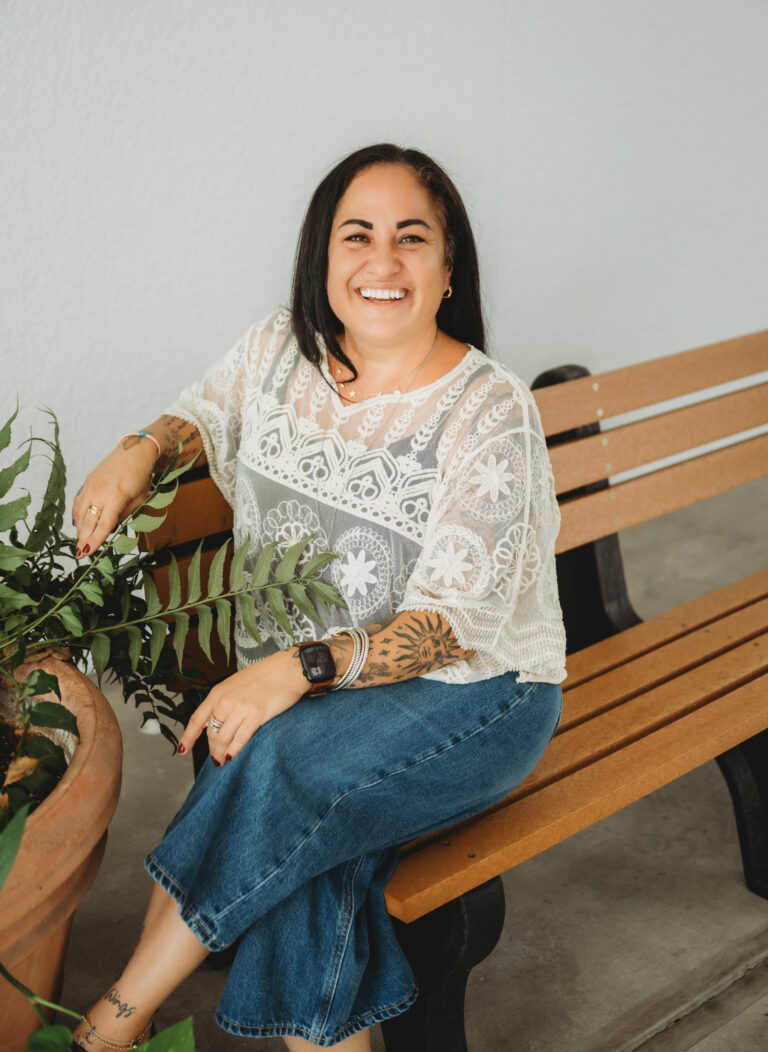
Child, Teen & Adult Psychotherapist
Sim Diehl, LMHC
Child, Teen & Adult Therapist | DBT Skills Trainer | ADHD & Women | Parent Support | Mindfulness-Informed Therapy | Trauma & ART
Licensed Mental Health Counselor | Florida License #MH16759
Sim is a warm, creative, and deeply empathic therapist who works with children, teens, adults, and parents navigating ADD/ADHD and neurodivergence, trauma, anxiety, big emotions, emotional dysregulation, parenting, and life transitions.
Works With: Children • Teens • Adults • Parents • Families • Women & Mothers
Special Interests: ADHD & Neurodivergence • Trauma • Emotional Dysregulation • Anxiety • HSPs & BPD • Women’s Mental Health • Parenting • Child & Adolescent Mental Health
Approaches: DBT • DBT-C • Accelerated Resolution Therapy (ART) • Mindfulness • Expressive Arts • Neurodivergence-Affirming Care • Trauma-Informed Therapy
Who May Feel at Home in My Office
We may be a particularly good fit if you are:
- A child or teenager who doesn’t necessarily love the idea of “going to therapy.”
- A child, teen, or adult with ADHD or neurodivergence who wants to understand themselves rather than constantly feeling like they need to fix themselves.
- Someone who has experienced trauma and is interested in mindfulness-informed therapy or Accelerated Resolution Therapy (ART), which uses eye movements for trauma resolution like in EMDR.
- A woman who discovered—or began questioning—ADHD later in life.
- A mom with ADHD who feels overwhelmed by the mental load of parenting, work, relationships, and everyday life.
- A parent raising an emotionally sensitive, intense, or neurodivergent child who wants practical tools and greater understanding.
- A client who wants to know more about DBT and wants to bring those skills more fully into everyday life.
- A young person experiencing anxiety, trauma, emotional intensity, or difficulty managing big feelings.
- An adult who identifies as a highly-sensitive person and by that I mean you feel emotions deeply and want more effective ways to respond to them.
- Someone who connects with creativity, expressive arts, imagery, movement, or less traditional ways of exploring emotions.
- A person who wants a therapist who will take the work seriously—but doesn’t believe therapy has to feel serious all the time.
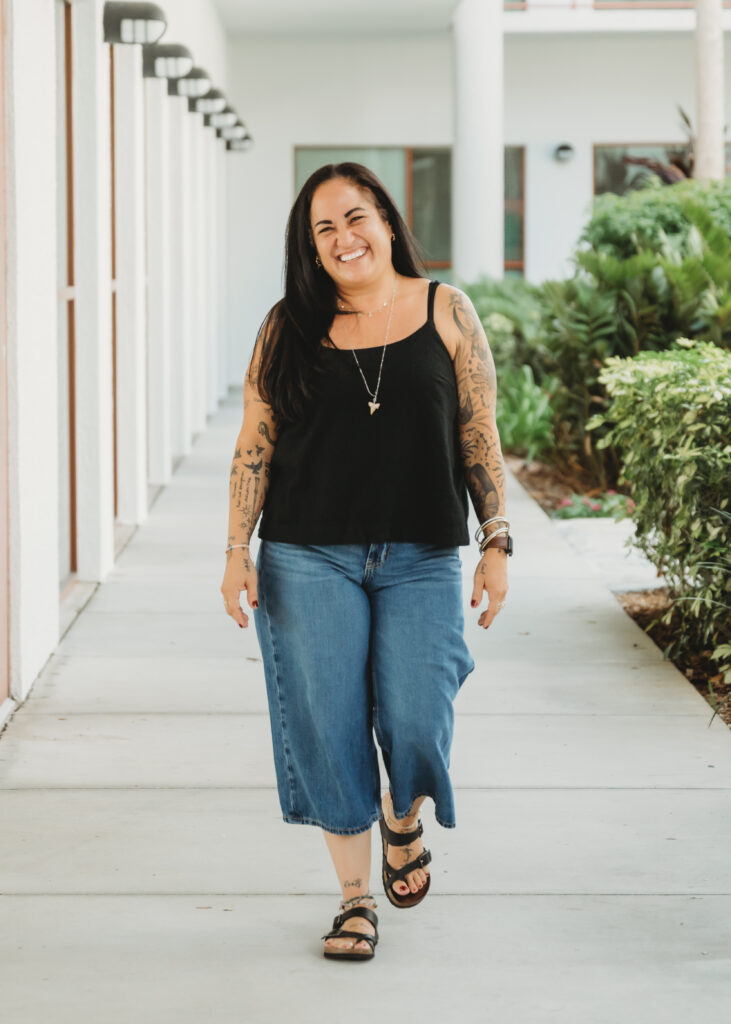
How I Help
Sometimes emotions are simply bigger than the words we have for them.
A child may show us through behavior. A teenager may shut down, explode, joke, withdraw, or insist that everything is “fine.” An adult may feel overwhelmed by anxiety, trauma, relationships, parenting, or the constant mental load of keeping up with everyday life.
For someone with ADHD or another form of neurodivergence, there may be another layer: Why can I accomplish incredibly difficult things but forget to make the phone call? Why am I so sensitive to certain things? Why can’t I just start the task? Why do my emotions go from zero to sixty? Why does everyone else seem to be managing this better than I am?
My job isn’t to tell you who you should be or make you fit more neatly into the world around you. It is to help you better understand how your particular brain and nervous system work, what your emotions may be communicating, and what strategies can help you navigate life with greater awareness, self-compassion, and confidence.
My approach is grounded in mindfulness-informed, trauma-sensitive, and neurodivergence-affirming care. We may talk. We may practice a DBT skill. We may use art or creative expression. We may work directly with a traumatic memory through ART. We may figure out why the beautifully designed planner you bought three months ago is still sitting unopened on the counter.
Therapy can be meaningful without feeling heavy every minute of the hour. And sometimes humor is exactly what helps us breathe again.
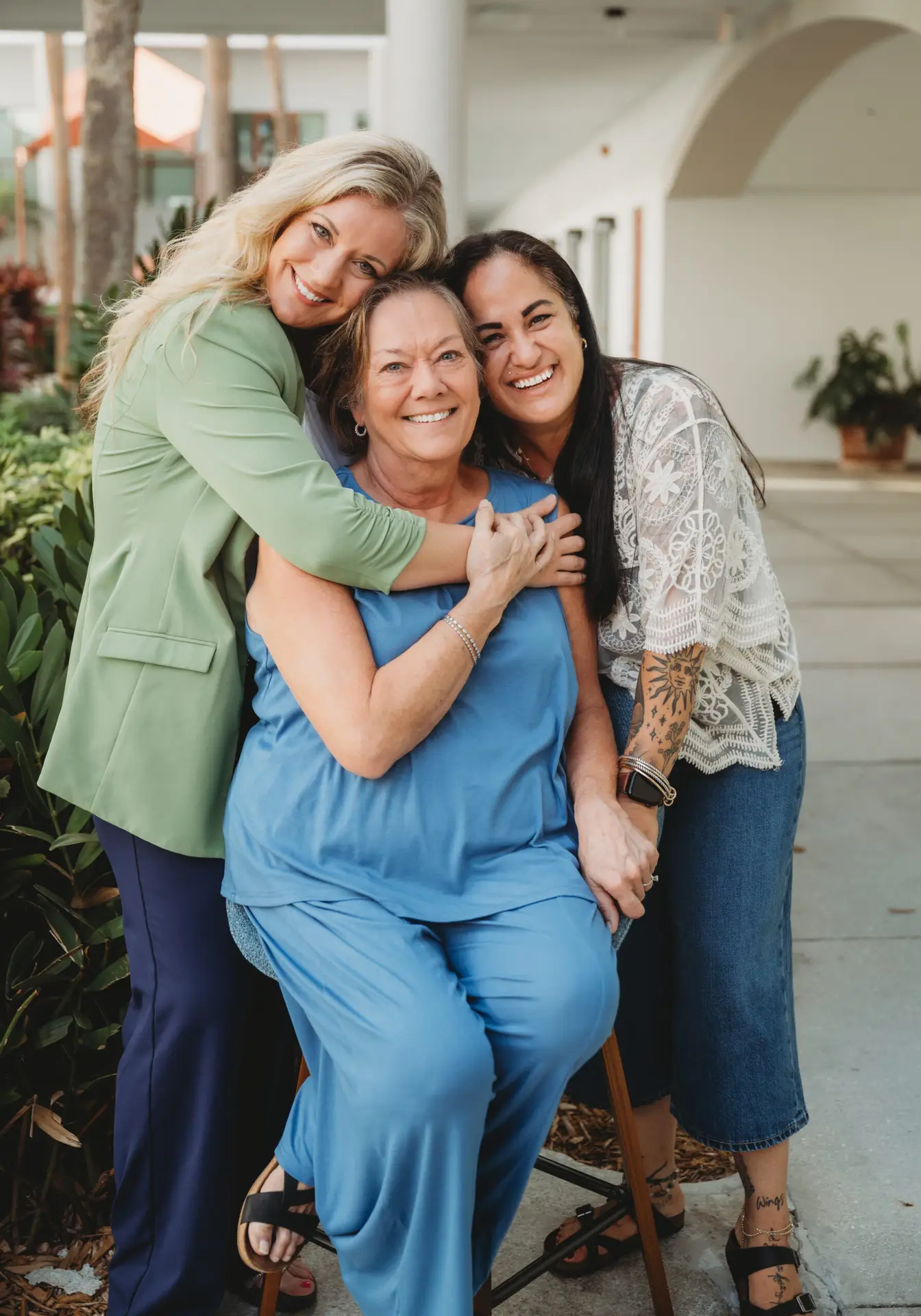
Women, Motherhood & ADHD
Motherhood can be demanding for any brain.
For a woman with ADHD, the sheer volume of invisible tasks involved in parenting can sometimes feel relentless: schedules, school forms, appointments, meals, laundry, activities, work responsibilities, relationships, remembering what everyone needs and where everyone needs to be—and somehow remembering your own needs in the middle of it.
As a single mom with ADHD, I understand some of this territory personally. I also know how easily women can interpret executive-functioning difficulties as personal failures. When you are surrounded by expectations about what a mother “should” be able to manage, it can be difficult to separate genuine challenges from years of accumulated self-criticism.
My work with women and mothers is not about becoming more perfectly organized. It is about understanding yourself more accurately.
Together, we can look at emotional regulation, overwhelm, executive functioning, boundaries, relationships, self-compassion, realistic systems of support, and the challenge of caring for yourself while caring deeply for other people.
Sometimes the goal isn’t doing more. Sometimes it’s creating a life that asks you to fight yourself less.
Additional Special Areas of Focus
DBT is one of the foundations of my work—and teaching DBT is something I genuinely love.
Over the years at Harmony Harbor, I have led and co-led DBT Skills Training Groups for teens, parents, and adults, sometimes facilitating three DBT groups in a single week. There is something powerful about watching someone move from simply learning a skill to realizing, “Wait—I can actually use this in my life.”
DBT teaches practical tools for mindfulness, emotion regulation, distress tolerance, and relationships. I bring these principles into individual therapy as well, particularly for clients who experience intense emotions, impulsivity, anxiety, relationship difficulties, ADHD, or difficulty getting regulated again once something has knocked them off balance.
For neurodivergent clients, DBT skills don’t have to be taught as rigid rules. We can adapt and experiment with them so they are realistic for the person actually using them.
I have completed Foundations Training in Dialectical Behavior Therapy through Behavioral Tech® and have additional training in DBT for Children (DBT-C), an adaptation of DBT designed to support children experiencing significant emotional and behavioral dysregulation while actively involving their parents and caregivers.
One of my favorite parts of this work is helping parents learn these skills too. When the adults surrounding a child better understand validation, mindfulness, emotional sensitivity, and effective responding, change can begin to happen throughout the family—not just within the child.
Kids and teenagers usually know pretty quickly whether an adult is being real with them.
I don’t believe children or teens need another adult sitting across from them telling them what they are doing wrong. They need a relationship where they can feel safe enough to be themselves while gradually developing the skills to understand their emotions, communicate what they need, and navigate difficult experiences.
My years working with youth began before joining Harmony Harbor and include experience in residential treatment. That work gave me a deep appreciation for the complexity and resilience of children and adolescents, particularly those experiencing significant emotional or behavioral challenges.
I especially enjoy working with neurodivergent children and teens, including young people with ADHD who may have heard far more about what they need to improve than about what makes their brains interesting, creative, energetic, perceptive, or uniquely theirs.
I combine that experience with DBT, DBT-C, mindfulness, trauma-informed therapy, ART, expressive arts, creativity, and playfulness.
That may look different from one young person to another—and that’s the point.
Some kids talk. Some draw. Some create. Some need movement. Some need skills. Some need humor. Some need something for their hands to do while we talk. Some need time before they are ready to tell us much of anything at all.
Meeting them where they are is part of the work.
Trauma can leave people feeling disconnected from themselves, their bodies, their emotions, or their sense of safety.
My approach to trauma treatment begins with helping clients feel grounded in the present rather than pushing them to tell their story before they are ready.
Mindfulness can help us learn to notice thoughts, emotions, body sensations, and internal experiences with greater curiosity and less judgment. For neurodivergent clients, mindfulness does not have to mean sitting perfectly still with an empty mind. We can find accessible ways of practicing awareness that work with different bodies, attention styles, and nervous systems.
Over time, that awareness can create more space between what we feel and what we do next.
For clients who are ready to work more directly with traumatic or distressing experiences, I am a Master-trained clinician in Accelerated Resolution Therapy (ART).
ART is a trauma-focused therapy that uses imagery and eye movements to help the brain change the way distressing memories and sensations are experienced. Clients do not necessarily have to describe every detail of a traumatic experience aloud, which can make ART appealing for people who find traditional trauma processing overwhelming.
My goal is never to force healing into a particular formula. It is to help each client find approaches that feel safe, effective, and genuinely useful to them.
Not everything we experience can be neatly explained with words.
Creative expression can give us another language.
I enjoy incorporating art, imagery, creativity, movement, metaphor, and other forms of expressive exploration into therapy, particularly with children, teens, neurodivergent clients, and people who experience intense emotions.
Creative work can help externalize something that feels overwhelming internally. It can make an abstract emotion visible. It gives us opportunities to experiment, play, problem-solve, and sometimes understand ourselves in ways that conversation alone doesn’t quite reach.
For ADHD and neurodivergent clients in particular, creativity can also be a strength. Therapy does not always have to happen through fifty minutes of uninterrupted conversation while sitting still in a chair.
And no—you do not need to consider yourself artistic.
There is no artistic talent requirement for therapy.
ADHD is about much more than being distracted.
It can affect executive functioning, emotional regulation, motivation, time awareness, working memory, sensory experiences, relationships, organization, self-esteem, and the ability to begin or complete tasks—even when those tasks genuinely matter to you.
For many people, particularly women and mothers, ADHD may not have been recognized earlier in life. Instead, they may have learned to work extraordinarily hard to compensate, mask their struggles, or internalize the belief that they are lazy, scattered, too emotional, inconsistent, or somehow failing at things everyone else seems able to manage.
I have both professional training and lived experience with ADHD, and that combination deeply informs how I approach this work.
Therapy isn’t about turning an ADD/ADHD brain into a neurotypical one.
Instead, we can work toward understanding your patterns, recognizing your strengths, developing realistic supports, improving emotional regulation, reducing shame, and finding ways of living that work better with your brain rather than constantly fighting against it.
For children and teens, this also means helping families see beyond the behavior. A child who is struggling with impulsivity, transitions, emotional intensity, task initiation, or frustration may need skills and support—not simply more reminders to “try harder.”
Parenting does not come with a universal instruction manual—and neurodivergent families rarely fit neatly into generic parenting advice.
Sometimes a parent with ADHD is raising a child with ADHD. Sometimes multiple people in a household have different sensory, emotional, organizational, or communication needs. Sometimes everyone is overwhelmed at exactly the same time.
That changes what “effective parenting” may need to look like.
Through my training in DBT-C and DBT, I help parents develop practical strategies for validation, emotional regulation, boundaries, communication, and responding effectively when emotions are running high.
I also help parents become curious about what may be happening underneath a child’s behavior. Difficulty with transitions, impulsivity, forgetfulness, emotional intensity, task initiation, sensory overload, or frustration may look oppositional from the outside while reflecting something very different internally.
Supporting a child often means supporting—and understanding—the nervous systems of the people who love that child, too.
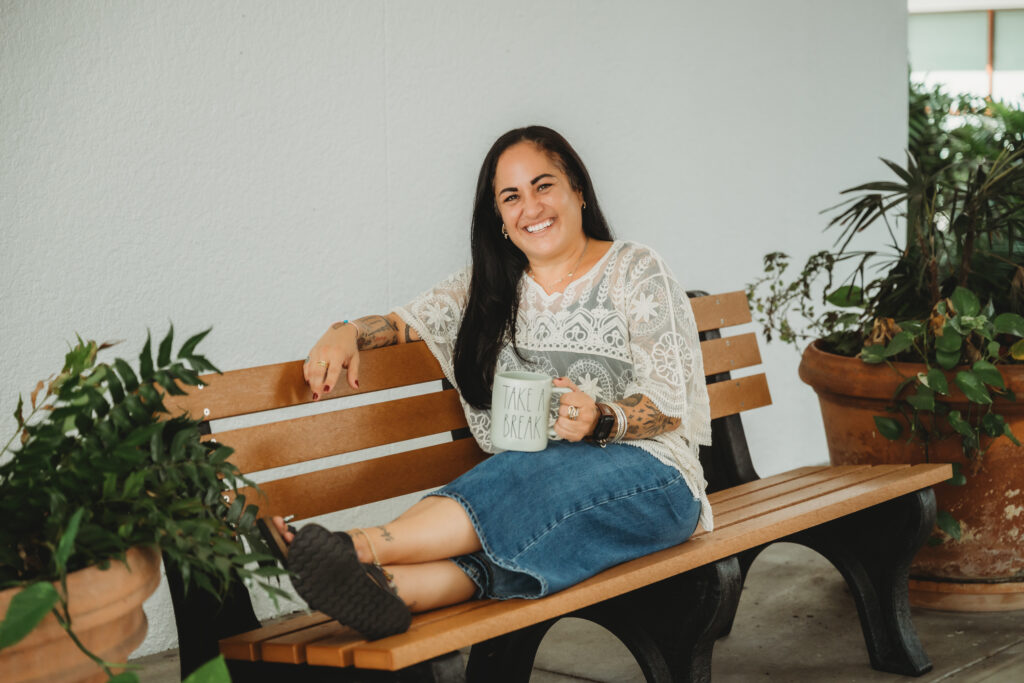
Education, Training & Professional Experience
Sim has more than 10 years of experience in the mental health field, including extensive experience working with children and adolescents in residential treatment before joining Harmony Harbor Counseling & Wellness in 2018.
She earned her Master’s Degree in Professional Mental Health Counseling from Webster University in 2015 and became a Licensed Mental Health Counselor in Florida in 2019.
Her advanced clinical training and experience include:
- Master Training in Accelerated Resolution Therapy (ART)
- Foundations Training in Dialectical Behavior Therapy through Behavioral Tech®
- Training in DBT for Children (DBT-C)
- Training and professional development supporting ADHD and neurodivergent clients, including women
- Extensive experience leading DBT Skills Training Groups for adults, teens, and parents
- Mindfulness-informed and trauma-informed approaches
- Expressive arts and creative interventions
- More than a decade of experience supporting children, adolescents, adults, and families
Sim Diehl offers in-person therapy in Sarasota and virtual throughout Florida
2201 Cantu Ct, Suite 104
Sarasota, FL 34232
We are located in the Live Oak Office Building